A promising type of cancer care that’s largely been available only in Boston is coming to central Massachusetts.
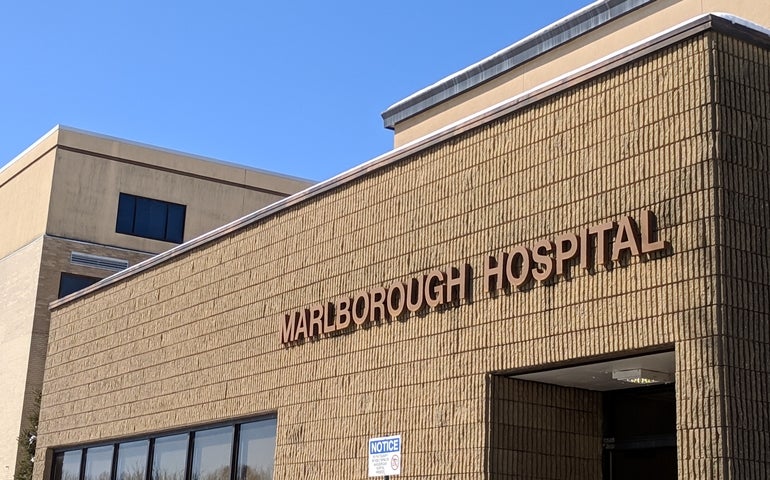
The state Public Health Council on Wednesday unanimously approved UMass Memorial Health Care’s application to buy a proton beam, and expand UMass Memorial’s Cancer Center at Marlborough Hospital in order to offer proton therapy services.
The project is expected to cost nearly $54 million.
UMass Memorial says the investment will boost regional health care access, improve clinical outcomes and quality of life for patients, potentially increase survival rates, and reduce travel burdens for patients who currently must trek to Boston to receive proton therapy over 24 consecutive sessions.
For now, there are just two proton beam therapy units in New England, and they’re both operated by Massachusetts General Hospital, said Teryl Smith, director of the Department of Public Health’s Bureau of Health Care Safety and Quality. Those units treated about 640 patients annually from 2021 to 2023.
“Concentrating this innovative cancer care in Boston also means that residents in central and western Mass. travel far from home to receive daily proton therapy treatment, which presents significant challenges, including hotel expenses, heavy traffic and parking limitations,” Sen. Jamie Eldridge of Marlborough told the council. “These barriers disproportionately impact residents without flexible jobs, affordable child care or reliable source of transportation, as well as elderly patients without caretakers, means of travel or the ability to travel long distances.”
He added, “Patients in our region should not have to go all the way to Boston or experience long wait times and high costs to receive the life-saving care they desperately need.”
Proton therapy will be available for patients in February 2028, UMass Memorial spokesperson Kristy Lee told the News Service.
UMass Memorial’s application to DPH describes proton therapy as a “highly effective and proven cancer treatment that improves the precision of radiation in targeting tumors and reduces potential damage to healthy tissue in the body.”
Delivering proton therapy was historically “cost prohibitive,” but design advancements have significantly reduced the cost and made it more “feasible” for health care institutions to pursue, the application says.
The targeted therapy can reduce side effects from treatment like fatigue, skin reactions and gastrointestinal issues, and lead to faster recovery times, Smith said. Proton therapy can treat multiple types of cancer, including head and neck, esophageal and pediatric cancer.
Research shows that proton therapy is more cost-effective than radiation therapy, “especially when there’s a clinically significant reduction in terms of toxicity and for particular cancers that are close to other vital organs,” said Dr. David McManus, chair of the Department of Medicine at UMass Chan Medical School.
“This is especially critical for UMass Memorial Health’s high percentage of Medicare and Medicaid patients who may have or suffer from chronic health issues, greater complexity of care, heightened risk of adverse effects and additional challenges both during and after their treatments,” McManus said.
By identifying patient cases in which proton therapy is “clinically appropriate,” McManus said UMass Memorial can reduce costs, particularly those tied to hospital readmissions due to complications from radiation therapy or other post-treatment issues that “require expensive follow-up clinical care.”
“Due to its precise nature, proton therapy is also incredibly effective and safer for treating cancer in children, whose long-term growth and development may be disproportionately impacted by unintended and excessive cell damage from conventional radiation therapy,” McManus said.
In its application, UMass Memorial pointed to the high volume of cancer cases in Worcester County as it outlined the need for bulking up services at the Cancer Center in Marlborough.
Worcester County has the third highest cancer incidence rate in Massachusetts, with 457 cases per 100,000 individuals, according to data from 2017 to 2021, Smith said. He said UMass Memorial also expects to receive proton therapy referrals for patients coming from Franklin, Hampshire, Berkshire and Hampden counties.
“For too long, patients in central Mass. and beyond have had to sacrifice in order to — even potentially switch hospital systems — to get the treatment that they need,” Rep. Danielle Gregoire of Marlborough told the council. “And this is another step in the right direction to allowing for and providing state-of-the-art treatment to people here in MetroWest and to the city of Marlborough that I represent and beyond.”

