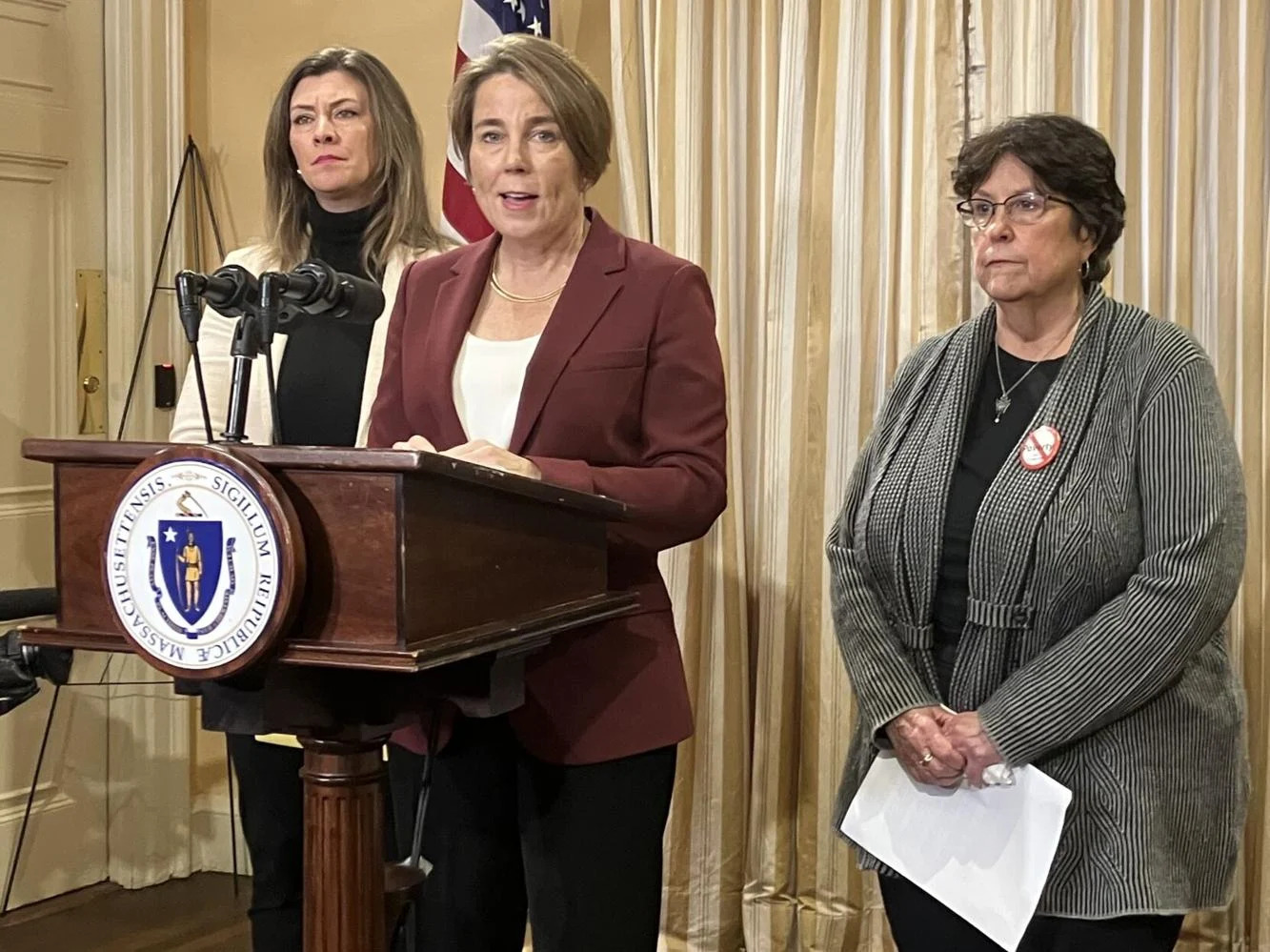
Gov. Maura Healey called the Trump administration’s latest SNAP funding threat “outrageous,” saying Massachusetts already collects the data the administration is looking for, and doesn’t consider it relevant to provide to the federal government.
Speaking with reporters Tuesday, Healey criticized President Donald Trump’s warning to withhold Supplemental Nutrition Assistance Program (SNAP) administrative funds from Massachusetts and other Democratic-led states unless those states provide certain information about those receiving the assistance. She said it punishes working families, seniors, children and people with disabilities.
“What President Trump needs to do immediately is order Secretary Rollins to release SNAP funding and ensure that Americans don’t go hungry,” she said.
Agriculture Secretary Brooke Rollins said the administration may cut SNAP funds because some states have refused to provide data about recipients, including names and immigration status, to help identify potential fraud.
“We asked for all the states for the first time to turn over their data to the federal government to let the USDA partner with them to root out this fraud, to make sure that those who really need food stamps are getting them,” Rollins said, according to the AP, “but also to ensure that the American taxpayer is protected.”
Rollins said states that have complied have reported some irregularities, including roughly 186,000 deceased individuals receiving benefits and 500,000 cases of duplicate payments. However, the agency has not released detailed data on how much in benefits are affected by error or fraud.
“If a state won’t share data on criminal use of SNAP benefits, it won’t get a dollar of federal SNAP administrative funding. Let’s see which states stand for accountability and which are just protecting their bribery schemes,” Rollins wrote in a post on X.
About 42 million Americans rely on SNAP, with an average monthly benefit of roughly $190 per person.
Healey said Massachusetts already verifies eligibility for SNAP beneficiaries and considers the federal request unnecessary.
“Waste, fraud and abuse is something that I take very seriously… The data is not relevant. The court has already decided this,” she said.
Responding to SNAP data requests from the Trump administration earlier this year, Massachusetts and other Democratic-led states filed a lawsuit, fearing the data might be used for deportations.
“I will not allow this Administration to fuel their cruel immigration agenda with information wrongfully taken from families who are just trying to make ends meet. I’m proud to stand with my colleagues in demanding federal privacy laws are upheld,” Attorney General Andrea Campbell said in July when she filed the suit to halt the data collection.
President Bill Clinton-appointed District Judge Maxine Chesney sided with the states to temporarily freeze the Trump administration’s plan to compel them to share the sensitive information.
“As Plaintiff States are required by law to safeguard information they obtain from applicant households … they are, in effect, prohibited from disclosing it where the recipient announces in advance an intent to use it for some other purpose,” Chesney wrote in her restraining order.
The states argued the U.S. Department of Agriculture risked violating federal privacy laws.
“It looks like now they’re going to have to go back to court, but this is all made-up stuff,” Healey said. “And it’s really unfortunate. And you know who’s paying every single day are mothers and fathers worried sick about how they’re going to feed their kids. That’s what’s happening right now. Shouldn’t happen in America.”
The USDA’s administrative funds, which could be withheld, cover the costs states incur to operate SNAP, including processing applications, verifying eligibility and ensuring compliance.
The direct benefits provided to recipients are fully funded by the federal government and are not being withheld, the agency said. Disrupted administrative funding could slow or complicate benefit delivery.
The federal government gave the states until Dec. 8 to respond to their data requests.
Campbell also joined another legal challenge against the Trump administration’s SNAP policies last week.
On Nov. 26, Campbell joined 21 other state attorneys general in filing a lawsuit to block federal guidance that the coalition says unlawfully restricts SNAP eligibility for certain legal immigrants.
The guidance, issued by USDA in late October, mischaracterized eligibility for permanent residents, refugees, asylees and other humanitarian entrants, even after they obtain green cards, according to Campbell’s office.
The lawsuit argues that the USDA guidance misapplies federal law and agency regulations. Under federal statutes, refugees, asylees, humanitarian parolees and other legal immigrants become eligible for SNAP once they meet standard program requirements.
“The Trump Administration continues to evade its responsibility to feed people, this time by targeting our immigrant communities,” she said in a press release.

