Facing a potentially crowded and costly 2026 ballot cycle, lawmakers advanced legislation to tighten disclosure rules for ballot question campaigns and reveal who’s funding them.
The Joint Committee on Election Laws recommended companion bills, H 868 and S 507, which are now before the House and Senate Ways and Means committees. The votes signal interest among lawmakers in updating laws that critics say have not kept pace with the scale and sophistication of modern ballot campaigns.
The Ballot Spending Transparency Act would expand what ballot question committees must report to the Office of Campaign and Political Finance (OCPF), increase the frequency of required filings, and more clearly define non-cash political support that currently can remain largely out of public view for much of a campaign cycle.
Sen. John Keenan (D-Quincy) co-chairs the Election Laws Committee and said the volume and scope of ballot questions moving through the initiative petition process played a role in his decision to advance the bill.
“I think the number of ballot questions that have been proposed for the upcoming election kind of reinforced the need for this,” Keenan said in an interview. “These ballot questions oftentimes, whether it’s one side or the other, they’re very well financed, and the public has a right to know, and should know, where the money’s coming from behind each side of the argument.”
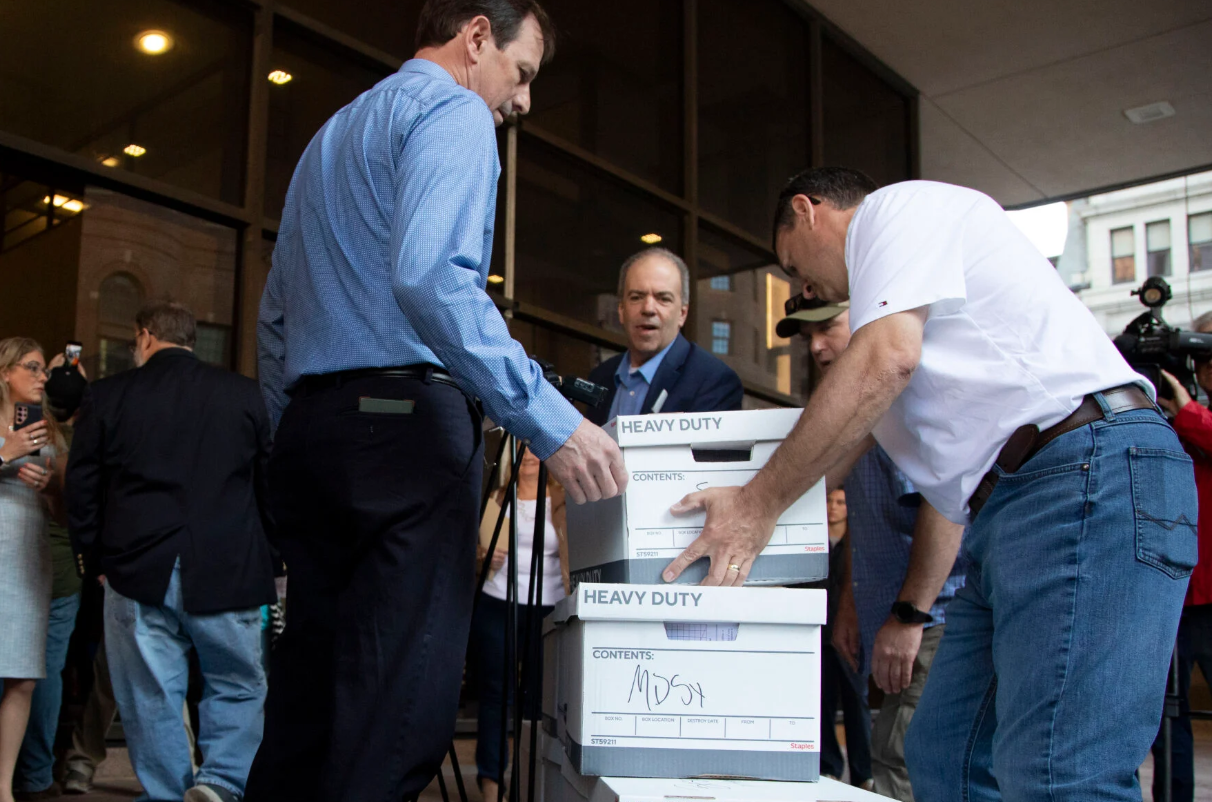
Election officials are reviewing nearly 150 boxes of signatures submitted by campaigns, and as many as 12 questions could be presented to voters in November 2026. The measures span a wide range of policy areas, including tax policy, rent control, public records access, election reforms and housing development.
Keenan said that when voters are inundated with ads, transparency about who is paying for them becomes critical. “People turn on the TV or look at social media, and they’re hit with these ads about a ballot question, and they really don’t know where they’re coming from,” he said. “This makes the whole process more transparent. It allows people to get a better sense of who’s behind these ads.”
Ballot question committees face less frequent reporting requirements than candidates for office, particularly during the first eight months of an election year, according to the bill summary from sponsor Rep. Daniel Ryan. Sen. Sal DiDomenico is the primary sponsor in the Senate. The legislation would close that gap by requiring more frequent pre-election reports and continued post-election filings until all debts are paid.
The bills would also add a statutory definition of “in-kind contributions,” covering non-cash support such as free or discounted goods and services, staff time, or expenses paid on a committee’s behalf. Ballot committees with questions on the statewide ballot would be required to itemize in-kind contributions worth more than $50, disclose new debts or liabilities, and explain why those obligations were incurred.
At an October hearing on the bills, the executive director of Common Cause Massachusetts urged lawmakers to act, pointing to dramatic growth in ballot question spending both nationally and in the Commonwealth.
“Initiative petitions are a powerful tool for direct democracy that enhance government responsiveness and increase citizen participation,” said Common Cause’s Geoff Foster. “But they can also be used by powerful special interests to buy their preferred public policies, and they often become colossal spending operations. Right now, our reporting requirements for ballot question committees are far too lax.”
Dev Chatterjee of Common Cause provided lawmakers with data compiled from OCPF filings showing the scale of the increase. In 2024 alone, Massachusetts ballot campaigns received more than $43 million in cash and in-kind contributions, he said, accounting for 3.4% of national ballot question spending even though the state represents about 2.1% of the U.S. population.
Analyzing six election cycles, Common Cause found that ballot committees in Massachusetts raised more than $340 million, with roughly $120 million of that total coming in during months when no reporting was required.
“That’s a massive amount of money moving through the system with no public visibility,” Chatterjee told lawmakers.
Legislative leaders, who exercise control over the traditional Beacon Hill agenda, have expressed unease over the role of well-financed interest groups in the initiative process. House Speaker Ron Mariano has questioned whether the state is drifting toward a California-style ballot system dominated by moneyed campaigns.
“It really makes me wonder: Are we becoming California, where you go out and get some money because there are very few financial restrictions on some of these special interest groups?” Mariano said in November, after Attorney General Andrea Campbell certified dozens of potential ballot questions.
Keenan said he expects some behind-the-scenes resistance from groups that have benefited from looser disclosure rules, but predicted it would be difficult for opponents to make their case publicly.
“I think it’s very difficult for those that support the ballot questions to come out publicly and say, ‘Oh, we don’t want you to know exactly how much we’re spending,'” he said.
Rep. Leigh Davis of Great Barrington, a member of the Election Laws Committee, called the proposal a “no-brainer” during the October hearing.
Ryan’s bill got a favorable committee recommendation in November and has bipartisan support, including from House and Senate Minority Leaders Brad Jones and Bruce Tarr. Senate Election Laws Committee members also recommended their bill in November, with a 5-0 vote featuring support from Majority Leader Cindy Creem.
With the bills now headed to Ways and Means, lawmakers will weigh their fiscal impact and decide whether to advance them at a time when they will also be asked to weigh in on the merits of the 2026 ballot questions.

