🔒Feeding Worcester: Nonprofits strain to meet surging food insecurity
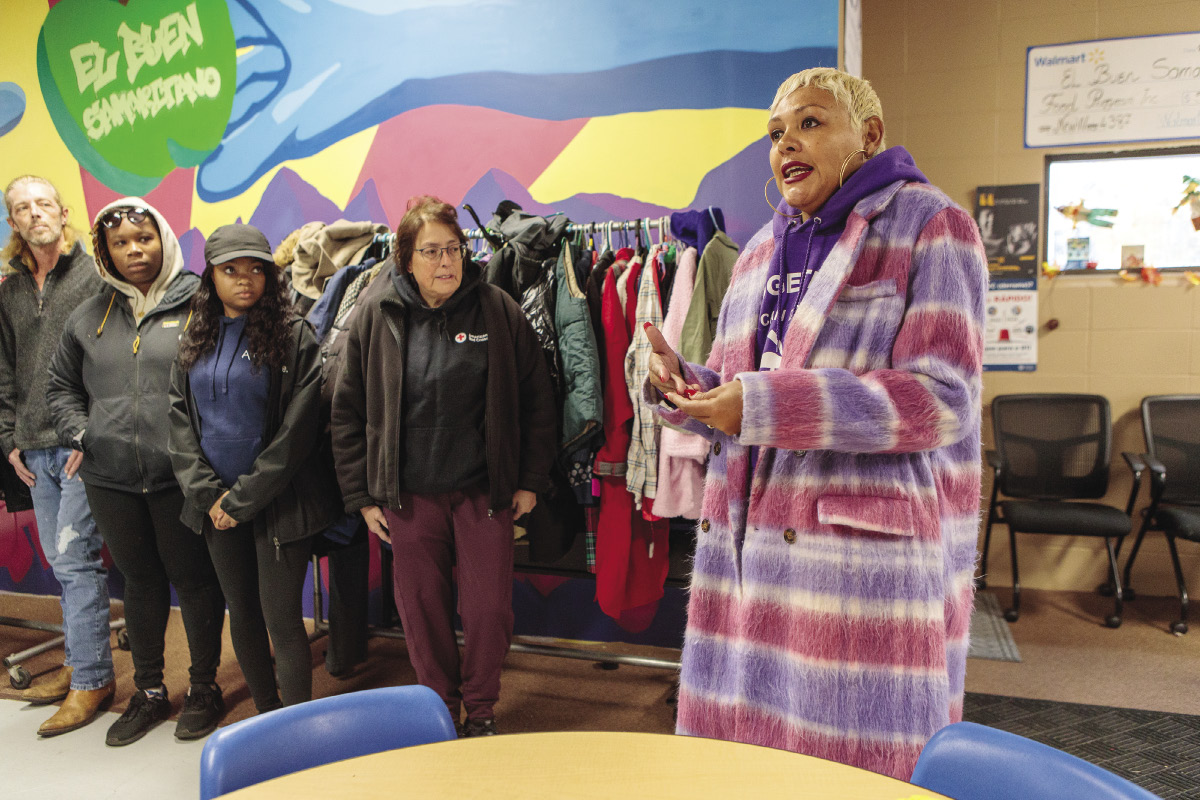
Mari Gonzalez describes the history and mission of El Buen Samaritano and provides instructions to several groups of volunteers before the food pantry officially opens for the day., PHOTOS | MATT WRIGHT
On a cold Tuesday afternoon, a line begins forming hours before the doors open at The Mustard Seed on Piedmont Street. Families cluster on the sidewalk with grocery bags tucked under their arms. Volunteers weave through the dining room, setting out tables, sorting boxes of produce, and preparing trays of hot food.
Inside, Director Ray Kane moves quickly between the pantry shelves and the kitchen. He describes The Mustard Seed’s work simply: Its mission is to provide a healthy, nutritious meal every night, Monday through Friday, rooted in the traditions of the Catholic Worker movement.
Over 52 years, the organization has expanded to include a weekly medical clinic run with Health Care for the Homeless, a Tuesday food pantry, a community block party, and a free summer camp for local children.
But the mission remains centered on addressing hunger.
“Clothe the naked, feed the hungry: the basic principles of Catholic social teaching,” he said.
Today, hunger in Worcester is rising faster than it has in years. According to the Greater Boston Food Bank’s 2025 Food Access Report, 42% of Worcester County households experience food insecurity, one of the highest rates in the state. Worcester’s poverty rate, roughly 20%, further intensifies the challenge.
For Central Massachusetts nonprofits like The Mustard Seed and El Buen Samaritano Food Program, that gap now shows up in the most measurable ways: The number of people coming through the door.
Rising need at The Mustard Seed
Kane joined The Mustard Seed six years ago, during the earliest days of the COVID-19 pandemic, when volunteer numbers plummeted and demand surged. What he has seen in just the past year surpasses even those crisis months.
“Our dining room is overflowing every night, more than it’s been in a long time,” Kane said. “We’re averaging about 120 meals a night, sometimes more.”
The pantry numbers have grown even faster.
“Back in January 2024, we were averaging around 55 households a week,” he said. “Last week we had 193 households; the week before, 206; and before that, 196.”
Just a few years ago, those were monthly totals. Now, they are weekly.
The pantry is seeing 15 to 20 new households every week, representing families from 11 different Worcester ZIP codes, including Dominican, Albanian, Afghan refugee, and Central African households, he said. People leave with enough groceries for a week: eggs, milk, produce, beans, rice, cheese, yogurt, and fresh fruits and vegetables.
Keeping up with this volume requires substantial logistics for an all-volunteer team. Three volunteers pick up food from the Worcester County Food Bank every Tuesday, bringing in as much as 3,000 pounds in a single trip. Others unload, sort, and pack groceries.
The organization has made several adjustments to meet changing needs. It now provides halal meat for families who require it, has added Wednesday night pantry hours to reach about 30 more families, and has made the layout more accessible for seniors and people with disabilities.
El Buen Samaritano sees similar trends
Across the city, El Buen Samaritano Food Program is experiencing the same surge due to increased cost of living and the attempted halting of Supplemental Nutrition Assistance Program (SNAP) payments during the federal government shutdown.
“Demand at our pantry has grown dramatically. Typical Fridays see about 500 households; currently, we’re serving 809 households, and almost 6,000 people,” said El Buen Executive Director Maricelis “Mari” Gonzalez.
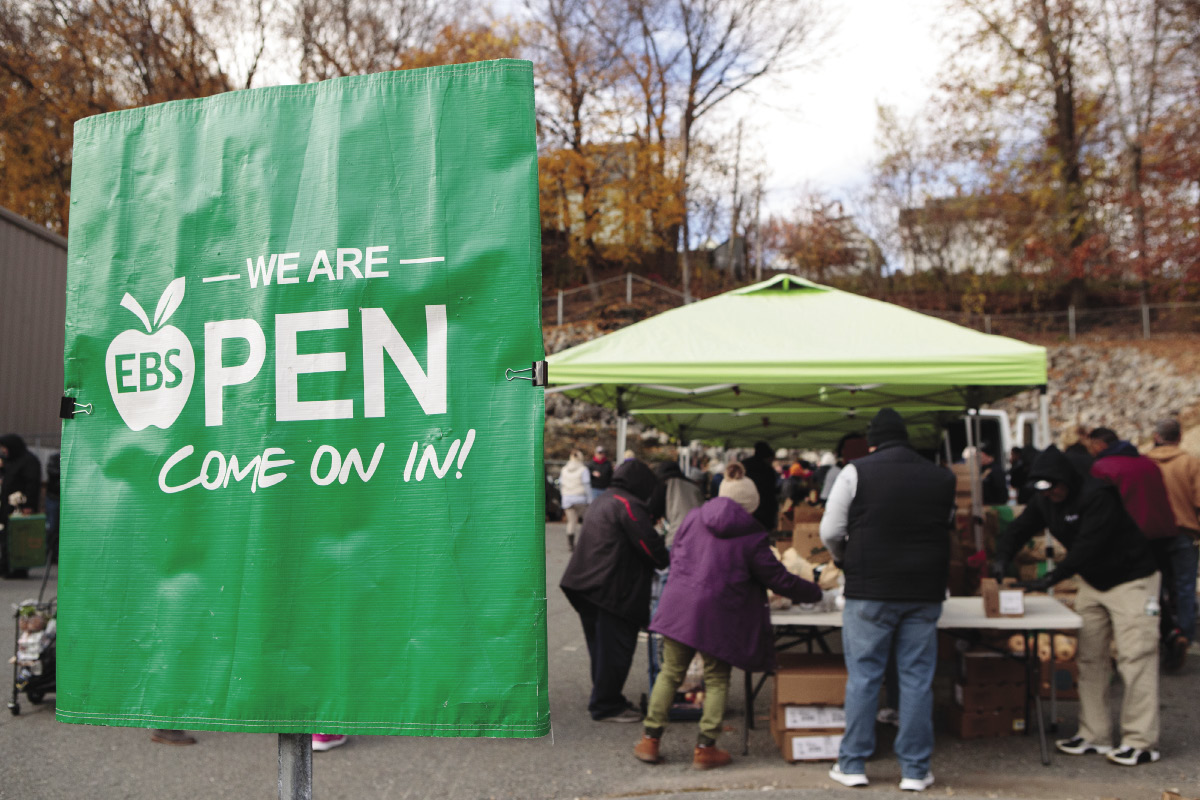
El Buen Samaritano is a food pantry located at 39 Piedmont St. in Worcester. PHOTO MATT WRIGHT
There has been a 61.8% increase in households served and a 140% increase in individuals serve, Gonzalez said.
The organization has responded by expanding home delivery for seniors and families without transportation and strengthening partnerships with schools, churches, and community groups. The increased demand includes working families, newly arrived immigrants, seniors on fixed incomes, and parents holding multiple jobs
Policy shocks and local consequences
This fall’s temporary interruption of federal nutrition benefits placed added pressure on families and nonprofits. In a Nov. 12 press release, the United Way of Central Massachusetts estimated that more than 80,000 people across the region, including 53,000 Worcester residents, were affected when SNAP benefits were disrupted during the federal shutdown.
United Way President and CEO Tim Garvin called it a crisis that demanded an immediate, coordinated response. The organization launched the UWCM’s United Response Fund, raising $1.2 million in two weeks to distribute emergency grocery gift cards and grants to local partners including Worcester Community Action Council, Worcester Housing Authority, and the Regional Environmental Council.
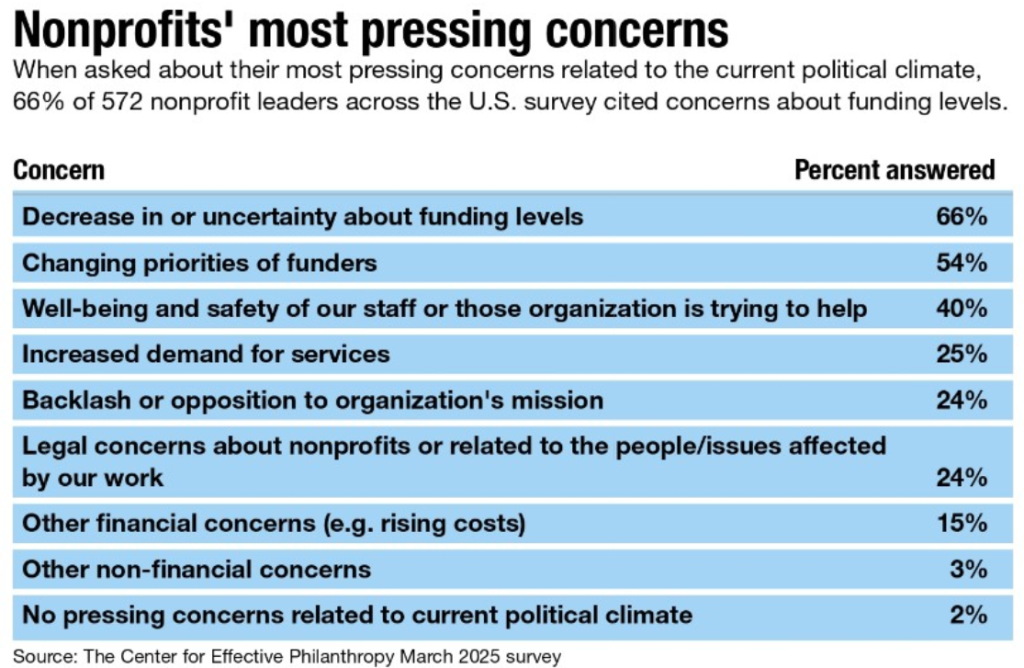
Decreases in funding are among the most pressing concerns for nonprofits.
“Gift cards are an essential way to deliver direct aid,” Garvin said. “Our role is to connect people and resources so that no one is left behind and our community doesn’t wait for help to arrive.”
Philanthropy “cannot replace the scale of federal programs,” but “doing nothing is not an option,” Lynn Cheney, United Way vice president of communications, said. “Our community must act quickly, effectively, and together when crisis strikes.”
Both The Mustard Seed and El Buen Samaritano reported noticeable spikes in first-time visitors immediately after the SNAP delay, adding operational strain.
A network built on volunteer power
The Mustard Seed operates entirely with volunteers. Kane credits the organization’s sustainability to its core team of about 10 regular volunteers along with dozens more from local schools, parishes, and business groups.
“I could never do this without them,” he said. “Their energy and commitment keep us going.”
El Buen Samaritano relies on similar contributions from their volunteers.
“Our volunteers have already surpassed 1,000 for the year, and it’s not even the end of the year yet. The demand is real, and we are grateful for every opportunity to serve,” Gonzalez said.
Despite the constant demand, Kane said donations often arrive at crucial moments, including food drives from churches like St. Francis Episcopal Church in Holden and St. Mark’s Church in Sutton, and support from businesses such as Vibra Healthcare. The community response during the SNAP reductions was particularly striking, with residents dropping off boxes of cereal, peanut butter, pasta, and staples.
“There are times when I worry we won’t have enough, and then suddenly we’ll get a donation or a new volunteer,” Kane said. “It always seems to come together.”
Community moments that inspire hope
Gonzalez reflects on personal stories: A single mother of three teenage boys came in after covering rent, car insurance, hygiene supplies, and sports fees, asking how she is going to feed her boys. Due to efforts by the community, the family left with food and an easement of their anxiety.
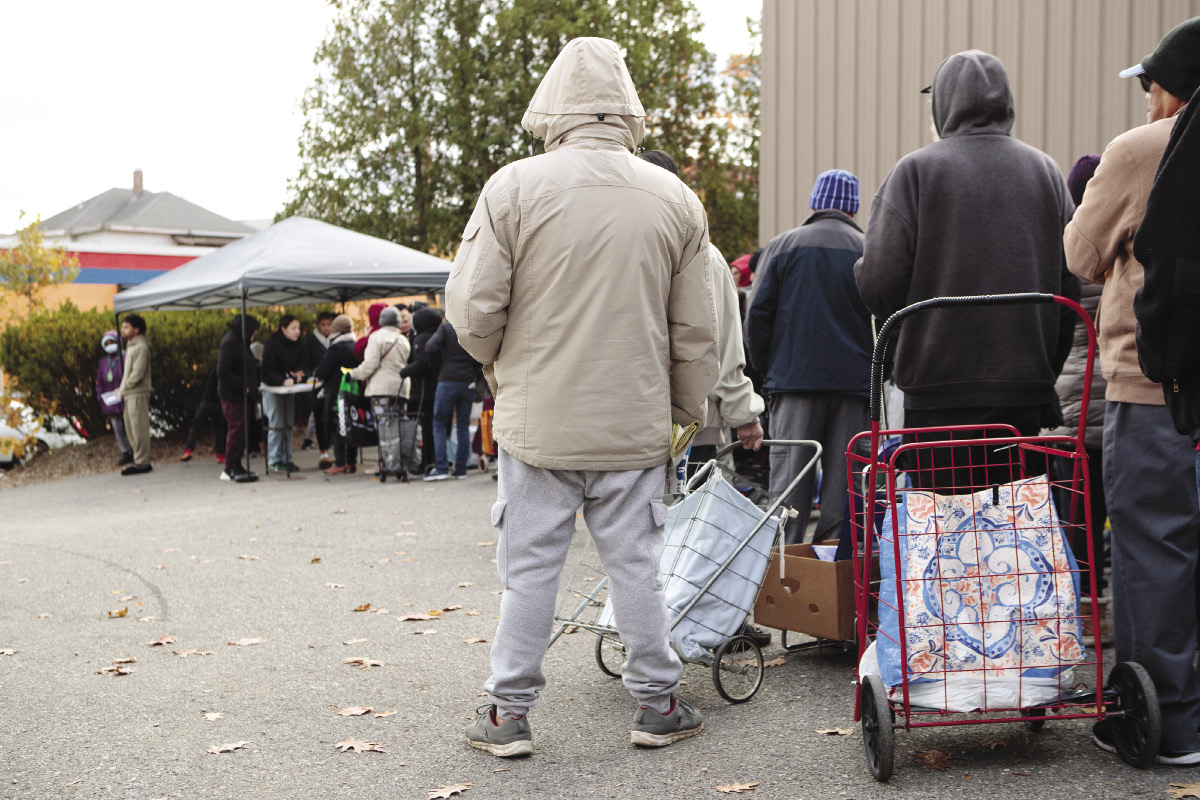
Clients of El Buen Samaritano wait in line for a number allowing them to pick what food they want to take home. PHOTO MATT WRIGHT
“It reminded us why our doors are always open: to serve families in need, provide support, and bring a little hope in challenging times,” Gonzalez said. “Moments like these are a powerful reminder of the impact community support can have.”
Even with the pressure, Kane remains optimistic. The relationships built through the pantry and meal program sustain the work. He recalled celebrating the birth of a baby in a Central African refugee family, an example of the connections forged through the organization.
“A colleague of mine likes to say, ‘We’re the little pantry that could,’” he said. “Sometimes we look at the numbers – 206 families served in just two and a half hours – and wonder how we did it.”
Kane often handles intake himself, drawing on his ability to speak English, Spanish, and French to help guests communicate their needs. Some former clients have returned as volunteers, creating what he described as a full-circle moment rooted in gratitude and community.
Charlotte Powers is a fall editorial intern for the Worcester Business Journal. She is a junior at College of the Holy Cross and studies political science, with a minor in environmental studies.