🔒Down, but not out: As they fight to remain open, Job Corps centers in Devens and Grafton are reeling from the Trump Administration’s efforts to shut them down
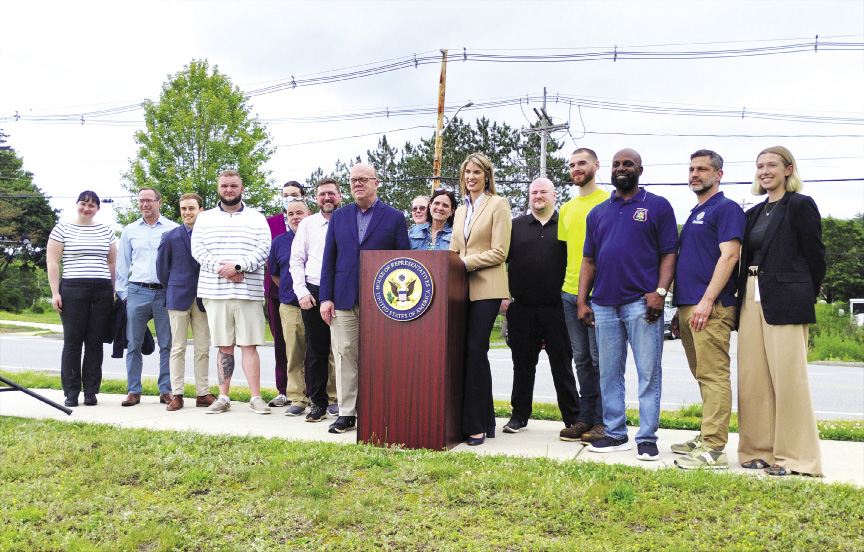
Congressman Jim McGovern (D-Worcester, left of podium) and Congresswoman Lori Trahan (D-Fitchburg, right of podium) stand with Job Corps alumni and supporters during a press conference in June. PHOTOS | ERIC CASEY
Despite the setback, the centers have persisted. A major breakthrough came when the federal government restarted background checks needed to enroll students.
In late May, Central Massachusetts’ two Job Corps Centers were thrown into turmoil, as word got out that the U.S. Department of Labor was planning to shutter 99 contract-operated centers across the country.After news of DOL’s shutdown attempt had circulated among Job Corps centers, it was confirmed on May 29 with a press release, which cited what it said were high costs and a startling number of serious incidents at centers as the reason for the move.
The sudden announcement and the pace at which DOL was attempting the closures upended Job Corps Centers in Grafton and Devens, according to those in around the centers who spoke to WBJ, as well as alumni and elected officials speaking at a press conference organized by elected officials in June.
The move was presented as a temporary closure but cited President Donald Trump’s budget proposal, which called for the program to be permanently eliminated. If successful, Trump’s efforts would end a program launched in 1964 to tackle high youth unemployment while creating workers for various trades.
The program can serve as a lifeline for young adults from disadvantaged backgrounds and are otherwise at risk of falling through the cracks, said Jeannie Hebert, president and CEO of the Blackstone Valley Chamber of Commerce, who has worked closely with the Grafton center over the years.
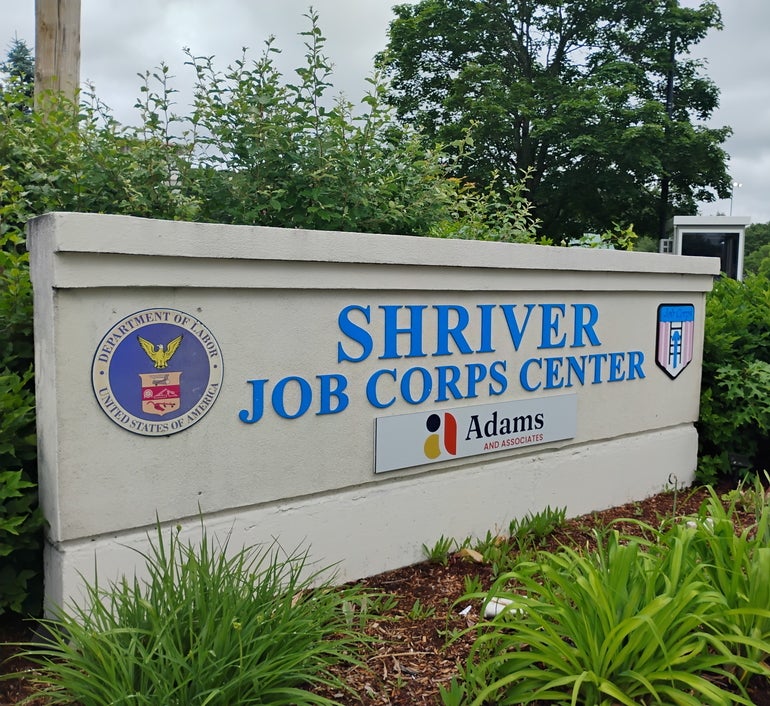
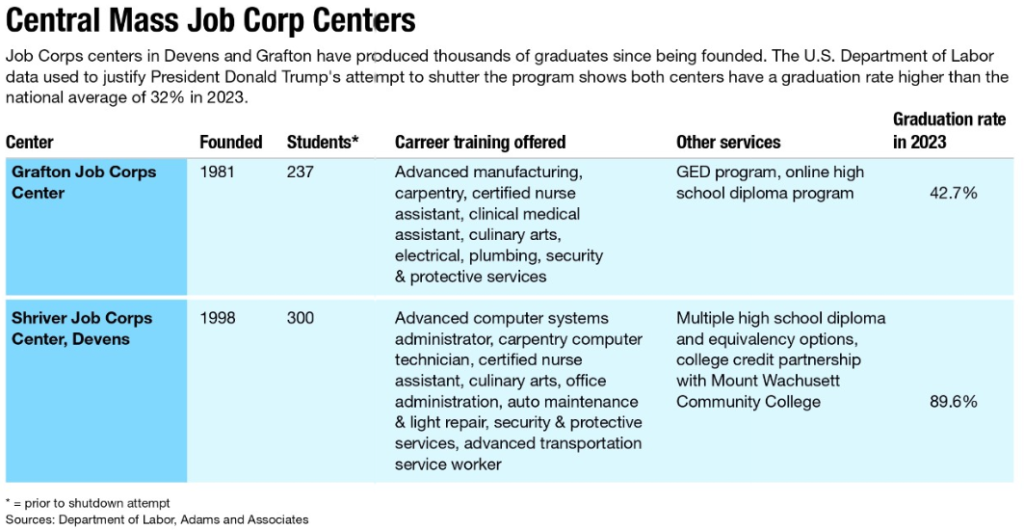
The Shriver Job Corps Center in Devens has been operating since 1996. The center had a traditional graduation rate of 89.6% in 2023, the highest of any center in the country. PHOTO ERIC CASEY
The shutdown attempt had a significant negative impact on the center’s ability to operate, she said.
“It was criminal to treat students that work so hard and really value the program that way,” Hebert said in a Dec. 4 interview with WBJ. “Also, they lost a lot of the instructors over there, because it was an unstable situation. All around, it was just a terrible thing that didn't have to happen.”
While two court battles over the shutdown continue, the president has found very few allies on Capitol Hill in support of his efforts, as high-profile Republicans and large bipartisan contingents of House and Senate lawmakers are pushing to keep the centers funded.
Central Massachusetts has Job Corps Centes in Grafton and Devens.
For now, the two centers in Central Massachusetts continue to operate and recover from the impact of Trump’s shutdown attempt, and have been able to once again enroll students.
With an additional Massachusetts center in Chicopee, the impact of the three locations adds $80 million per year to the Massachusetts economy, according to a June letter to U.S. Secretary of Labor Lori Chavez-DeRemer from the state’s congressional delegation. Prominent local institutions which have hired Job Corps graduates include Worcester-based UMass Memorial Health and Herb Chambers automotive dealerships throughout the state, along with the armed services, which is a common destination for graduates.
Harrison Ingles, a 2008 graduate at the Devens site, began attending the center after losing both his parents at age 18. The program allowed him to go from sleeping in his car to becoming a high school English teacher, he said at the June press conference.
“Job Corps is one of the best programs that our country has ever created for expanding economic opportunities and enriching communities,” Congressman Jim McGovern (D-Worcester) said in a Dec. 4 interview with WBJ. “I've visited the center in Grafton many times since I've been in Congress. They've helped young people of all backgrounds, and especially those who have faced difficulties that no young person should ever have to go through.”
Colleen Lanza, center director at the Shriver Job Corps Center, declined to comment, saying Job Corps employees require Department of Labor approval in order to sit for interviews with the media. Grafton Job Corps Center Director Nicole Trombly didn’t respond to a request to comment.
Surviving the shutdown attempt
Trump’s shutdown efforts were temporarily halted by a federal judge in June, after the National Job Corps Association, a group representing employees and other Job Corps stakeholders, filed a lawsuit in New York against the Department of Labor. A second federal lawsuit was filed in Washington, D.C. by Job Corps students impacted by the shutdown attempt, also leading to an injunction.
DOL has appealed the injunction in both cases. Both appeal cases remain ongoing, according to the Civil Rights Litigation Clearing House, although a settlement appears to be in the works for the New York case, with a hearing scheduled for January.
“We hope the courts will recognize that all of this is an illegal power grab, and I'm hoping that they're going to reaffirm that the president cannot unilaterally end programs authorized and funded by Congress,” McGovern said.
Despite the relatively quick move to block Trump’s shutdown, much damage had already been done. Before the court ruling, Grafton Job Corps officials were scrambling to find housing for more than 30 students who would otherwise be homeless if the center closed.
Some students left the centers and have yet to return. McGovern said the Grafton center’s capacity went from 100% in March to 40% in the summer. It has since returned to around 70%, he said.
The impact of the shutdown was devastating for students, particularly those from tough upbringings who had been trying to do all the right things, Hebert said.
Jeannie Hebert, CEO of the Blackstone Valley chamber
“A lot of these students come from very disadvantaged backgrounds, and they have not always been told the truth about the way things are going to work out for them,” she said. “They just saw this as another incident of people failing them.”
Despite the setback, the centers have persisted. A major breakthrough came when the federal government restarted background checks needed to enroll students at centers, said Hebert.
The government had actually stopped processing background checks in March, before the shutdown was announced, among other reductions it said were cost-saving measures.
Bipartisan support
Thanks to bipartisan congressional support, Job Corps has previously survived attempts to shutter it by presidents Richard Nixon and Ronald Reagan, according to a 2014 article in the Washington Post.
Even though it's rarer than it was during the Nixon or Reagan eras, bipartisan congressional support may once again save the program.
Trump’s move to shutter Job Corps has received criticism from voices ranging from Sen. Susan Collins (R-Maine) to Sen. Bernie Sanders (I-Vermont), with 200 House lawmakers and 40 Senators for both sides of the political aisle signing a letter in support of the program.
The program remains funded, as the House and Senate work to come to terms on a 2026 budget. The House budget bill proposed halving its funding to $880 million, while the Senate version called for funding to remain flat, at about $1.7 billion.
McGovern was quick to point out DOL Secretary Chavez-DeRemer herself was a supporter of Job Corps funding when she was a member of the House of Representatives.
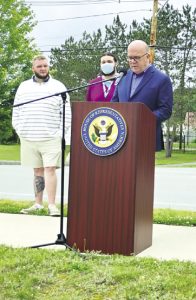
McGovern has been a staunch defender of Job Corps, saying it's an effective program and Trump Administration stats about graduation rates and violent incidents don't paint the entire picture. PHOTO ERIC CASEY
“I guess the only job she cares about defending right now is her own,” McGovern said. “The misinformation coming out of her office, and the misinformation coming out of Trump, it's just frustrating, because it is not reflective of the facts or the effectiveness of this program.”
McGovern and other critics of the shutdown have said the 2023 data used by DOL to support the shutdown, which showed a 32% traditional graduation rate and an average cost of $80,285 per student per year, were heavily impacted by disruption caused by the COVID-19 pandemic.
The Grafton Job Corps Center had a traditional graduation rate of 42.7% in 2023, while the Shriver Job Corps Center in Devens had a rate of 89.6%, according to data from the Department of Labor report.
Chavez-DeRemer referred to the DOL’s data showing the failures of Job Corps as overwhelming during the June hearing, but the data the department made public to justify the decision only covered 2023.
Chavez-DeRemer’s office did not respond to a request for an interview for this article.
During a congressional hearing, she said safety issues and high costs justified the closures. She said she was unaware of the extent of Job Corps shortcomings before joining DOL.
Hebert said officials from the Small Business Administration met with her earlier this year, and she brought them to the Grafton center to see its impact and to meet with students. She said the Trump Administration should be using Sweden as a model, a country which a 2018 U.S. News & World Report article said has had more success than many in using government resources to adjust its labor market for modern times and lower unemployment.
“If they wanted to start pouring money and support into vocational schooling, they should make Job Corps their national vocational school, because it would be a great ROI for them,” she said. “I was told they would go back and talk to the administration, but I have not heard any feedback since then.”
Eric Casey is the managing editor at Worcester Business Journal, who primarily covers the manufacturing and real estate industries.