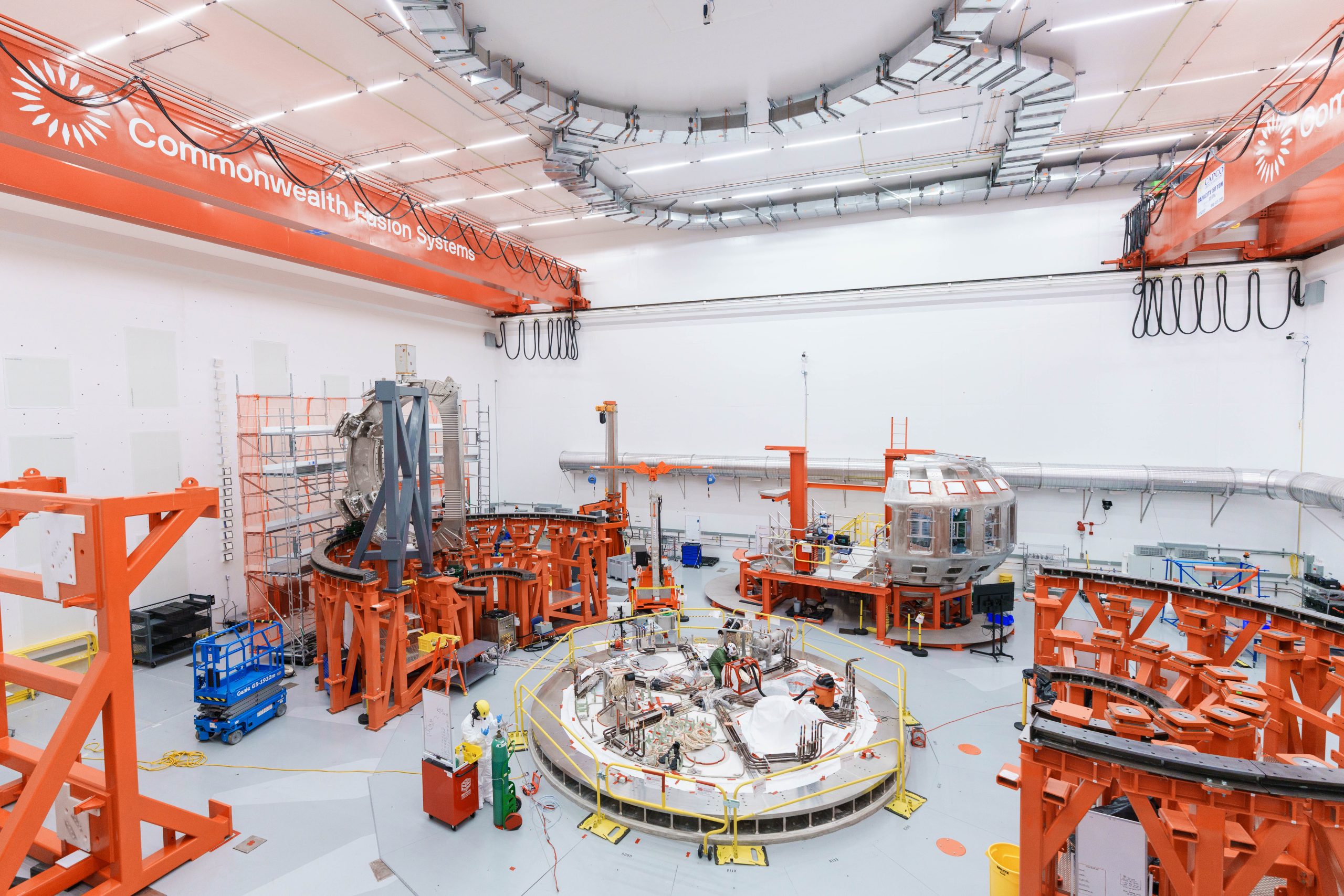
Devens-based Commonwealth Fusion Systems is teaming up with two global tech firms in an effort to accelerate the commercial adoption of fusion energy, as the company shared an update on the development of its first fusion energy machine. The partnership announced Tuesday morning will see CFS collaborate with Germany-based Siemens AG and California-based NVIDIA to develop a digital twin of SPARC, its initial fusion energy machine expected to come online next year, using artificial intelligence.The digital twin will be constructed using data and software from NVIDIA and Siemens. NVIDIA is the most valuable company in the world, with a market cap of $4.7 trillion, having surpassed consumer tech giant Apple about a year ago as the value of NVIDIA’s chips rose due to their use in AI technologies. Siemens has a market cap of $193 billion, according to Yahoo Finance.CFS says the use of this digital twin will help accelerate its efforts to commercialize fusion energy, the same source of energy powering the sun. The partnership was announced on Tuesday from the main stage of CES, an annual consumer electronics trade show held in Las Vegas.Bob Mumgaard, co-founder and CEO of Commonwealth Fusion Systems, PHOTO | COURTESY OF COMMONWEALTH FUSION SYSTEMS“CFS will be able to compress years of manual experimentation into weeks of virtual optimization using the digital infrastructure developed by NVIDIA and Siemens,” Bob Mumgaard, co-founder and CEO of CFS, said in a Monday press release shared ahead of the official announcement. “Through this collaboration, we’re demonstrating how AI and integrated digital engineering can accelerate progress from design to grid power. This will allow us to transform how we build and operate fusion machines in the race to commercial fusion.”The partnership should accelerate the development of SPARC, which is expected to come online in 2027, Mumgaard said.“We're on track. We’re doing what we said we would do,” he said in a press conference on Monday. In addition to the partnership announcement, CFS revealed the first magnet has been installed in the physical SPARC machine in Devens.The digital twin of SPARC. IMAGE COURTESY OF CFSThe 24-ton, high-tech magnet is powerful enough to lift an aircraft carrier and runs at a temperature under -400 degrees Fahrenheit, Mumgaard said. He expects SPARC’s 18 main magnets to be installed by the end of the summer.In response to a question about the digital twin of SPARC and potential inaccuracies in AI systems, Mumgaard said the system’s design should minimize problems.“One of the fortunate things is that in this digital twin framework, you're really embedded next to the hardware itself.,” he said. “As you get more and more data and more of a track record, we should see that get all more and more accurate. Right now, we're still very much planning to use the digital twin as an insight tool, so that we can make better decisions as a team.”Commonwealth Fusion is still planning to put electricity on the grid with the Virginia-based ARC, the company’s first commercial-scale power plant, in the early 2030s, Mumgaard said.Nuclear fusion generates power by smashing together hydrogen atoms and has the potential to produce a limitless amount of energy without the potential for a meltdown. CFS is racing with a number of firms around the world to perfect the technology, having inked power deals with Google in June and a longtime shareholder in September.In December, CFS and other fusion-focused firms met with the U.S. Department of Energy to discuss accelerating growth of the technology. Eric Casey is the managing editor at Worcester Business Journal, who primarily covers the manufacturing and real estate industries.