Already a Subscriber? Log in
Get Instant Access to This Article
Subscribe to Worcester Business Journal and get immediate access to all of our subscriber-only content and much more.
- Critical Central Massachusetts business news updated daily.
- Immediate access to all subscriber-only content on our website.
- Bi-weekly print or digital editions of our award-winning publication.
- Special bonus issues like the WBJ Book of Lists.
- Exclusive ticket prize draws for our in-person events.
Click here to purchase a paywall bypass link for this article
The traditional picture of manufacturing is dark, dirty and dangerous. Advanced manufacturer Emuge-Franken’s West Boylston facility is anything but.
The firm’s floor is brightly lit and spotless, with most of the manufacturing happening behind the glass doors of its equipment. The company says working there can lead to a high-paying, fulfilling career.
“It's a much cleaner environment,” Bob Hellinger, president and CEO of Emuge-Franken USA/Canada, said. “You can't have oil dripping on the computer screens and so forth. I see it all the time. Whenever someone comes to visit us and they see the inside, they're like, ‘Wow, that's a really clean facility you have.’”
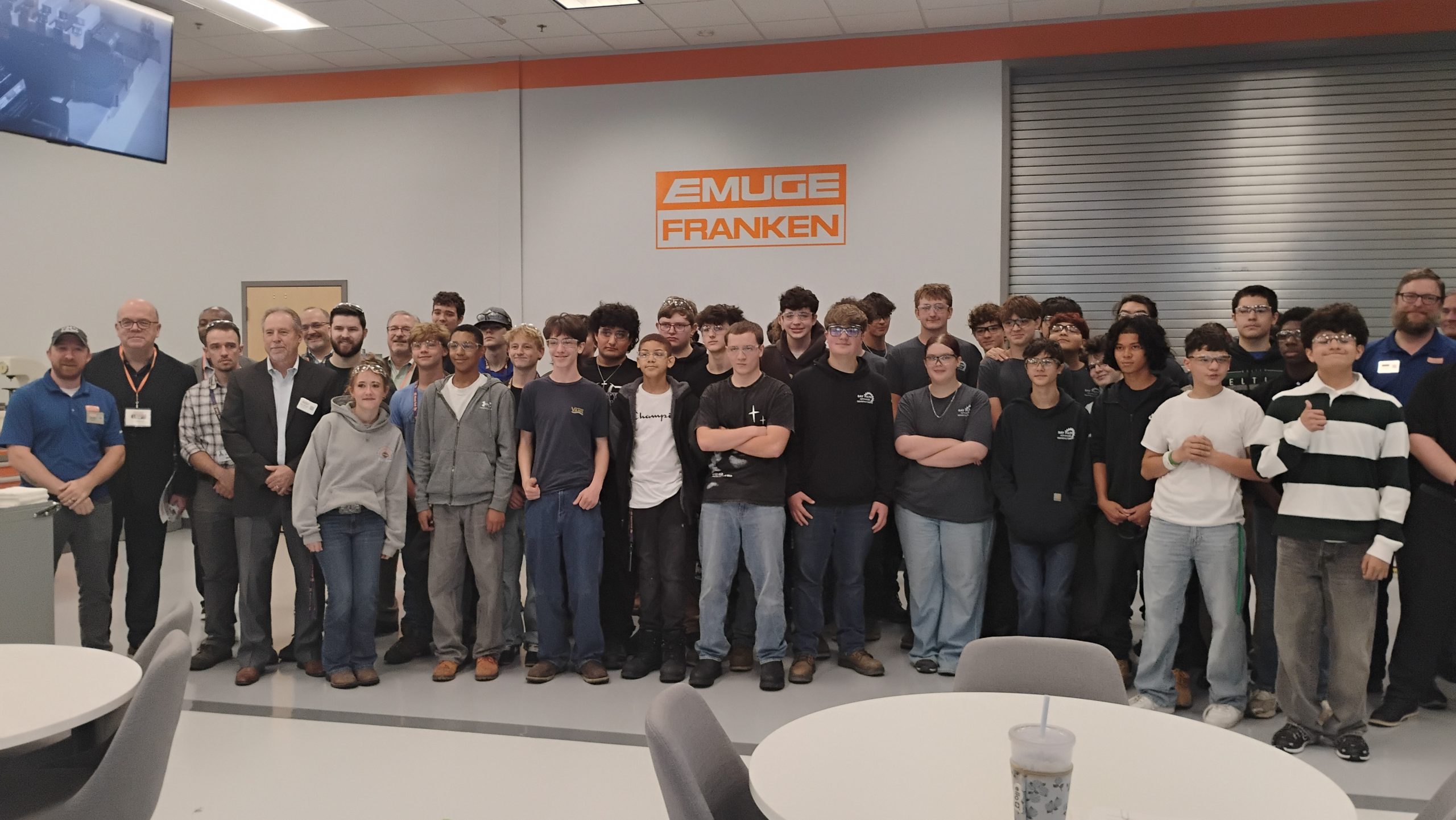
On Friday, the company opened its building to students from three area technical high schools, exposing the next generation of workers to the realities and potential of a career in the field.
Held on Manufacturing Day, an annual recognition on the first Friday of October and launched in 2012 by the Fabricators & Manufacturers Association, the purpose of Emuge-Franken’s “Explore the Future of Manufacturing” event was to dispel myths about life in the manufacturing industry and to build a pipeline of workers interested in the trades.
Emuge-Franken spent $2.5 million in 2026 to expand its manufacturing capabilities in West Boylston, with plans to invest $2 million more. The company makes high-precision cutting tools that other manufacturers use to shape metal parts.
Its products — including drill-like tools, thread-cutting taps and milling cutters — are used in computer numerical control machines to make holes, cut screw threads and carve complex shapes in materials such as steel, titanium and aluminum. These products are utilized by aerospace, defense, automotive, and other manufacturing firms.
Manufacturing support nonprofit MassMEP’s 2024 Voice of the Manufacturer report, based on responses from more than 200 Massachusetts manufacturers, identified skilled labor availability as a consistent constraint on growth.
This problem has been especially apparent for Emuge-Franken, as their CNC cutting-tool grinding machines require highly specialized workers. Hellinger said most of the other companies that still do this manufacturing are based in other parts of the country, limiting the available talent pool here.
“If someone comes here and they already know how to run one of our machines, they have a job,” Hellinger said. “We're at a disadvantage because a lot of manufacturing has been pulled out of New England over the years, and so we don't have the pool that maybe they have in Ohio and Indiana.”
Friday’s event drew over 40 students from Worcester Technical High School, Bay Path Regional Vocational Technical High School in Charlton, and Montachusett Regional Vocational Technical School in Fitchburg.
“The main purpose is to give exposure to the company to these trade school kids and show them that there's a manufacturing path that's local to them,” Hellinger said. “We manufacture, but we do something a little bit different. A lot of them will be exposed to metal cutting; we make the tools for that. This gives them a nice shot of a different type of manufacturing. Our goal is that hopefully one or two of these kids, the light will come on, and that they might want to spend some time with us.”
The tour began in the building’s technology center, where students saw how some of Emuge-Franken’s components are utilized in high-tech CNC machines, computer-controlled tools that automatically cut, drill or shape materials such as metal, wood or plastic into precise parts. From there, students learned more about the company’s use of technology and robotics and took a tour of the shop floor.
With the company headquartered in Germany, it has in the past brought in skilled workers to temporarily bridge gaps when needed. But with recent federal immigration policy changes, that has become more challenging, Hellinger said.
It usually takes about three years to turn a tech school graduate into a skilled CNC cutting-tool grinding specialist, but Hellinger sees that as a worthwhile investment. To create a consistent supply of workers here in Central Massachusetts, he would like to see more support for voc-tech schools.
“We have skilled labor positions, and we need to have that feeder,” Hellinger said. “The tech schools for us are really important because they train the next group of employees to come through. It's good to see that the schools are here. But you know we have 50 kids here, and they've got other trades that they can go into. It's just a small pool of people.”
Eric Casey is the managing editor at Worcester Business Journal, and primarily covers the real estate and banking & finance industries.

