Already a Subscriber? Log in
Get Instant Access to This Article
Subscribe to Worcester Business Journal and get immediate access to all of our subscriber-only content and much more.
- Critical Central Massachusetts business news updated daily.
- Immediate access to all subscriber-only content on our website.
- Bi-weekly print or digital editions of our award-winning publication.
- Special bonus issues like the WBJ Book of Lists.
- Exclusive ticket prize draws for our in-person events.
Click here to purchase a paywall bypass link for this article
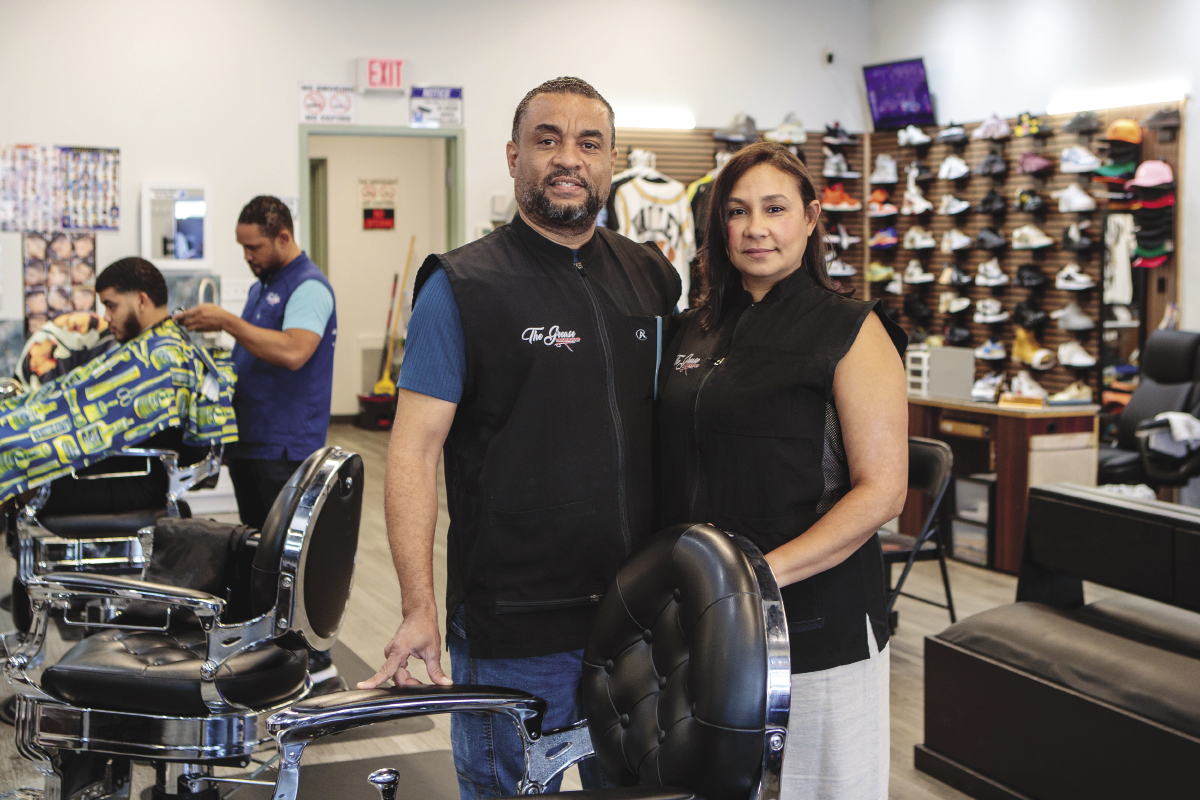
Edison Adón, owner of The Grease Barbershop, worked at the Table Talk Pie factory before becoming a barber at a local shop and eventually opening his own business.
His former location was tucked behind a building off Main Street in Worcester’s Main South neighborhood, a spot that brought with it little foot traffic.
Looking for further room for growth, Adón became aware of a new opportunity through his membership in the Main South Business Association: The planned opening of a new six-unit commercial condominium building by the Main South Community Development Corp., a project designed to give a path for small business owners to own their own storefronts.
The building opened this summer, turning the former contaminated lot at 807-815 Main St. into a hub of small business activity.
Now with five barbers, Adón has used his shop to give back to the community through second-chance hiring of those with past run-ins with the law and giving away free back-to-school haircuts.
“We want people to know we’re open to the community,” Adón said.
Adon’s experience reflects the challenge of growing and building equity that is faced by many small businesses in Main South.
For years, small business owners in Worcester's Main South neighborhood operated without leases that guaranteed their tenure, without equity in the storefronts they built up, and often without any real say when landlords raised rents, Main South CDC Executive Director Steve Teasdale said.
As the COVID-19 pandemic eased, many of those merchants were suddenly hit with steep rent increases and no way to push back. Main South CDC's new commercial condominium project was designed to change that, offering six local business owners a lease-to-own path to actually owning their storefronts.
"It became apparent that there was a need to bring some stability and security to local business owners, many of whom had been in this neighborhood for a long time and had really nothing to show, no capital appreciation, no vested interest," Teasdale said.
Many commercial landlords in the area were absentee owners uninterested in investing in their properties, Anna Kathryn Hodges, Main South CDC's resource development manager, said.
Neighborhood business revitalization
The project traces back to around 2024 and grew out of MassDevelopment's Transformative Development Initiative district, which operated in Main South from 2018 to 2022. TDI Fellow Ivette Olmeda worked with the Main South Business Association to gauge merchant interest.
Main South has long faced concentrated economic disadvantage. A 2019 U.S. Census-based neighborhood profile found that 78% of residents were of low or moderate income, with 25% below the poverty line.
“One of the ways to bring about neighborhood revitalization was through homeownership opportunities, letting owners become economic stakeholders in the neighborhood that they live in and have a vested interest.” Teasdale said. “What we should be looking to do is the same for business owners if they have an opportunity to own their own premises.”
Main South CDC then built an application process that scored candidates based on how long they had operated in the neighborhood, prioritizing BIPOC and lower-income business owners.
The six-unit, 9,000-square-foot building sits on a lot that had been vacant for years after a fire destroyed a former community home there. Tenants include Aretha's Kitchen, a Jamaican restaurant; Pikanadas Bakery; Ilkhy's Salón; The Grease Barbershop; Mandi's Travel Agency; and Mr. Services, a fashion accessories store displaced by an October fire at its previous location.
Teasdale said four of the six tenants are already in advanced talks with a bank on mortgage financing, partly motivated by a 10-year resale restriction that begins once they take ownership. Most tenants, he added, are already paying less rent than they were at their previous locations.
Teasdale said the condo site, a former brownfield location, is now a positive influence on the neighborhood.
“We’ve seen a change in that section of the street already this year,” he said.
An amalgamation of funding
Assembling the $4.84-million capital stack required piecing together public, private and nonprofit money.
MassDevelopment provided a total of about $2.49 million to the project, including a brownfield grant to clean up arsenic and petroleum contamination on the site, while the city of Worcester contributed $995,000 in American Rescue Plan Act funds and helped cover business fit-out costs.
UMass Memorial Health's Anchor Mission added a $650,000 low-interest loan to reduce construction costs. Bay State Bank agreed to keep the eventual mortgages in-house, with a 5% down-payment requirement.
The Anchor Mission works to improve community health through local investments in projects focused around workforce development and community support. Mario Florez, UMass Memorial Health’s vice president of community health and caregiver belonging and co-lead of the Anchor Mission initiative, said the health system was drawn to the Main South project because the neighborhood is among the areas it identifies as socially vulnerable.
The project represented an opportunity to support a type of asset-building effort that is common in housing but rarer for small businesses, he said.
“We know that homeownership is a key driver of wealth building,” Florez said. “This is an opportunity to apply that same concept to small business owners.”
Tricia Pistone, associate vice president of external affairs at HealthAlliance-Clinton Hospital and an Anchor Mission co-lead, said the low-interest financing was intended to help Main South CDC keep the eventual purchase price within reach of the tenants.
“This allows the small business owner to really own that building and benefit from the investments that they’re making in the space,” Pistone said. “It’s an opportunity for them to build equity and create a legacy for their family.”
Eric Casey is the managing editor at Worcester Business Journal, who primarily covers the real estate and banking & finance industries.

