Already a Subscriber? Log in
Get Instant Access to This Article
Subscribe to Worcester Business Journal and get immediate access to all of our subscriber-only content and much more.
- Critical Central Massachusetts business news updated daily.
- Immediate access to all subscriber-only content on our website.
- Bi-weekly print or digital editions of our award-winning publication.
- Special bonus issues like the WBJ Book of Lists.
- Exclusive ticket prize draws for our in-person events.
Click here to purchase a paywall bypass link for this article
When Becker College closed in 2021, the future of its Worcester property holdings was more than just a real estate question.
Scattered through the Elm Park neighborhood were stately houses the college had converted into dormitories, offices and academic buildings. Sold one at a time to the highest bidders, they could have become crowded student rentals or faced an uncertain future under owners with little connection to the area.
Instead, Worcester developer Russ Haims bought 27 Becker parcels for $10 million.
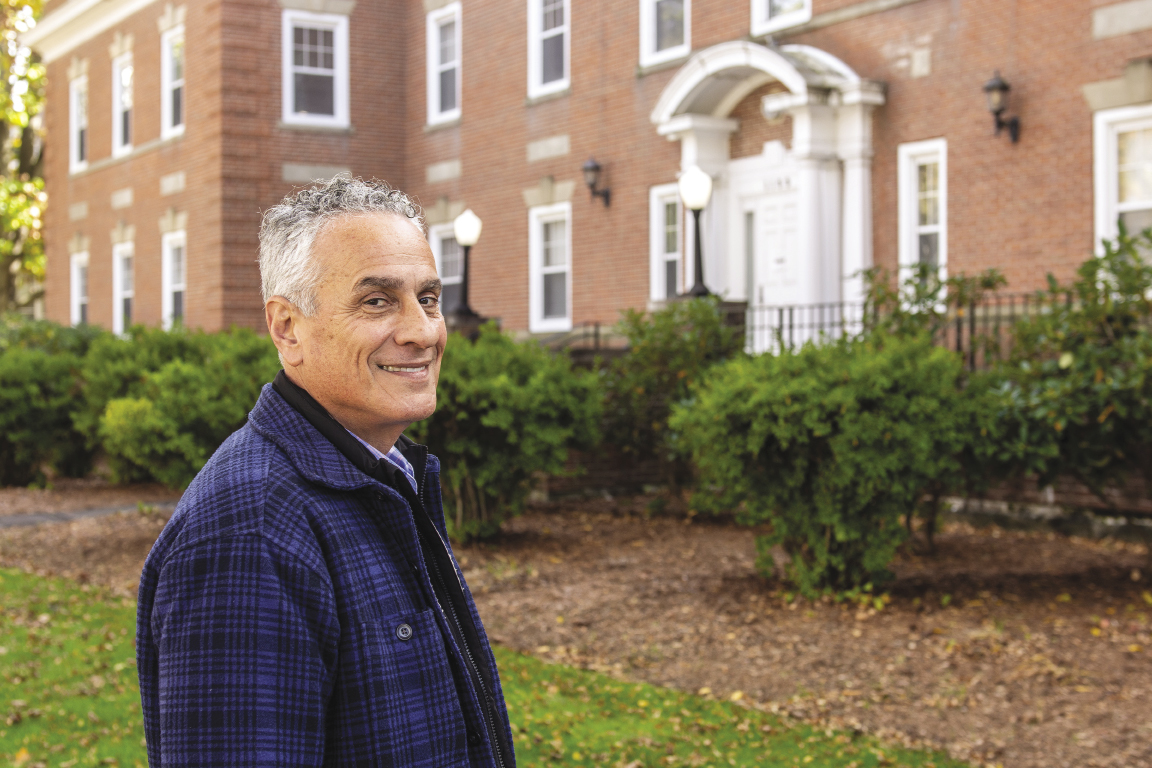
Five years later, the acquisition has paid off financially, he said, but his proudest return is visible along William, Sever, Cedar and Roxbury streets: Former institutional buildings are homes again, many of them single-family.
“It brought the neighborhood to where it should be or could have been,” Haims said.
Back to their roots
Haims, founder and president of Worcester-based Hampton Properties, was not new to Elm Park. His company, which has specialized in restoring historic Worcester properties since 1985, already owned buildings in the neighborhood when Becker’s financial struggles forced the college to close.
The October 2021 acquisition included 24 buildings and three parking lots and returned more than $15 million in assessed value to Worcester’s tax rolls. For Haims, concentrating so much of the former campus under one owner offered a chance to control what happened next.
Several properties began as large single-family houses before Becker converted them for institutional use. Haims removed office improvements, restored residential features and sold the properties to buyers who intended to live in them. He added deed restrictions requiring some to remain single-family homes, limiting the potential for future owners to divide them into lodging houses or crowded rentals.
That selectivity meant rejecting some higher offers, Haims said. He scrutinized buyers’ records and plans, looking for owner-occupants rather than investors seeking to fill large houses with students. Most of the transition took about 18 months, and the financial return exceeded his expectations.
The approach won over Patricia Glennon, an Elm Park resident since 1985. She recalled Haims pulling over while she walked her dog, introducing himself and telling her to call if she ever had a problem with one of his properties.
“He did a tremendous thing for as much for the neighborhood and the city as for himself, by far,” Glennon said.
A house near Glennon illustrates the outcome. Once a private home, it later became Becker’s president’s office. Haims required it to remain a single-family residence and found a household that restored it.
“He turned them back into single-family homes from office buildings or dorms, and it basically made this neighborhood worth calling a historical district,” Glennon said.
Nine dorms, one village
Haims did not return every Becker building to its original use. He retained nine former dormitories, restored the mostly historic properties and leased them to Worcester Polytechnic Institute. WPI operates them collectively as South Village, offering single, double and triple bedrooms in houses with shared living space.
The arrangement preserved student housing while avoiding a building-by-building sale. Haims still owns the nine houses and two surface parking lots, his remaining pieces of the original 27-parcel deal.
Other properties went to new owners. In 2024, Haims sold the former Boutin Student Center at 44 West St. to Bay State Bank for $3.15 million, after buying it as part of the Becker portfolio for $525,000. Bay State has since renovated the building for back-office operations.
Haims also sold 80 William St., a building previously used by Becker for its video game design program, to The Center for Applied Behavioral Instruction, a nonprofit special education school for students diagnosed with autism spectrum disorder and other related neurological disorders.
The building now houses CABI’s school for students around high school age, helping them navigate the transition into adult life.
Haims acknowledges not every resale has moved as quickly as he wanted. Some multifamily buildings sold to investors have undergone full renovations, while work at others has proceeded slowly. Still, Haims remains in contact with several buyers, fielding questions and recommending contractors years after the sales.
Bubble brewing?
Now semi-retired, Haims has reduced his holdings but remains involved with South Village and two properties outside Elm Park: Goddard House and Homestead Hall in Worcester.
Hampton bought the senior-living facilities in a $5-million sale-and-leaseback deal in 2024, and Haims said he has made substantial capital improvements while the operator continues leasing them, he said.
His semi-retirement has left him less certain about Worcester real estate’s daily pulse, but not less watchful. He sees three-deckers approaching or reaching prices he once considered implausible, fueled in part by investors pushed west from Greater Boston.
His concern is not simply the price. Buyers who stretch to acquire buildings without reserving money for major improvements may raise rents without modernizing apartments, he said. He is also watching what he sees as an increase in foreclosure activity, worried that distressed, poorly maintained properties could again destabilize neighborhoods.
“I’m a little concerned that there’s somewhat of a bubble,” Haims said.
Elm Park, at least, offers him evidence of another outcome. Rather than treating the Becker properties as disconnected assets, he said, he tried to preserve them as parts of a neighborhood, one property at a time.
“My heart and my intent is still to stay committed to that community, because it took a lot to keep it where it is, and you know it could have gone south very easily if the properties were all chopped up and sold to the highest bidder,” he said.
